

5 Street Food Spots in South Korea That Travelers Can’t Miss
Photo by JAMIE DIAZ

South Korea manifests its true nature not in the restaurants but on the sidewalks. As night falls, the streets are flooded with vapor, hissing tones, and silent lines of locals waiting patiently for a taste of what they are used to. The first real association with the country often occurs as the traveler goes through formal procedures, such as the e-arrival card, but as the traveler enjoys hot street food taken away, unscheduled and nonchalantly, this is where the first real association with the country takes place.
Street food reflects how South Koreans live, eat, and coexist across cities and regions. These five places portray that spirit very differently.
To the eyes of numerous visitors, Myeongdong represents the initial experience with Korean street food. The streets are turned into a moving kitchen as shops are shut down, and carts roll out. Here, the food is visual and appetizing and is meant to be watched and eaten in no time.
Myeongdong is employed because it eliminates the pressure. No bookings, no menus to read. Just point, order, and eat. In this region, one can explore how the street food can serve as a bridge to the newcomers and make the unknown taste familiar.
Food is more grounded in Gwangjang Market. Vendors cook meals on a daily basis, and in most cases, customers sit back-to-back at common counters.
The Ministry of SMEs and Startups of South Korea claims that there are over 1,400 traditional markets in the country, many of which remain daily food centers, not tourist centers, as well. Gwangjang is unique in the sense that there is no distance between locals and travelers when they eat.
Here, street food is not a fashion. It is continuity.
Hongdae feels alive even before the food appears. Music spills onto the street, performances are attended by only a few people, and people are not in a rush. The street food here is equivalent to such energy.
The stalls in this area tend to experiment with presentation and combinations, which are influenced by student life and creative culture. Dining turns into an element of the rhythm of the evening and not a break between activities.
Hongdae demonstrates how the demands of street food vary across the generations but still retains its purpose of comfort in daily life.
The street food in Busan is different from that in Seoul. BIFF Square is almost close to the port, and it mirrors a sea-created city. The wind is salty, and the speed is less intense.
This is a location that appeals to individuals not only at night but also during the day. Food stalls become a part of everyday life and do not seem like something special. It is a more conversational experience.
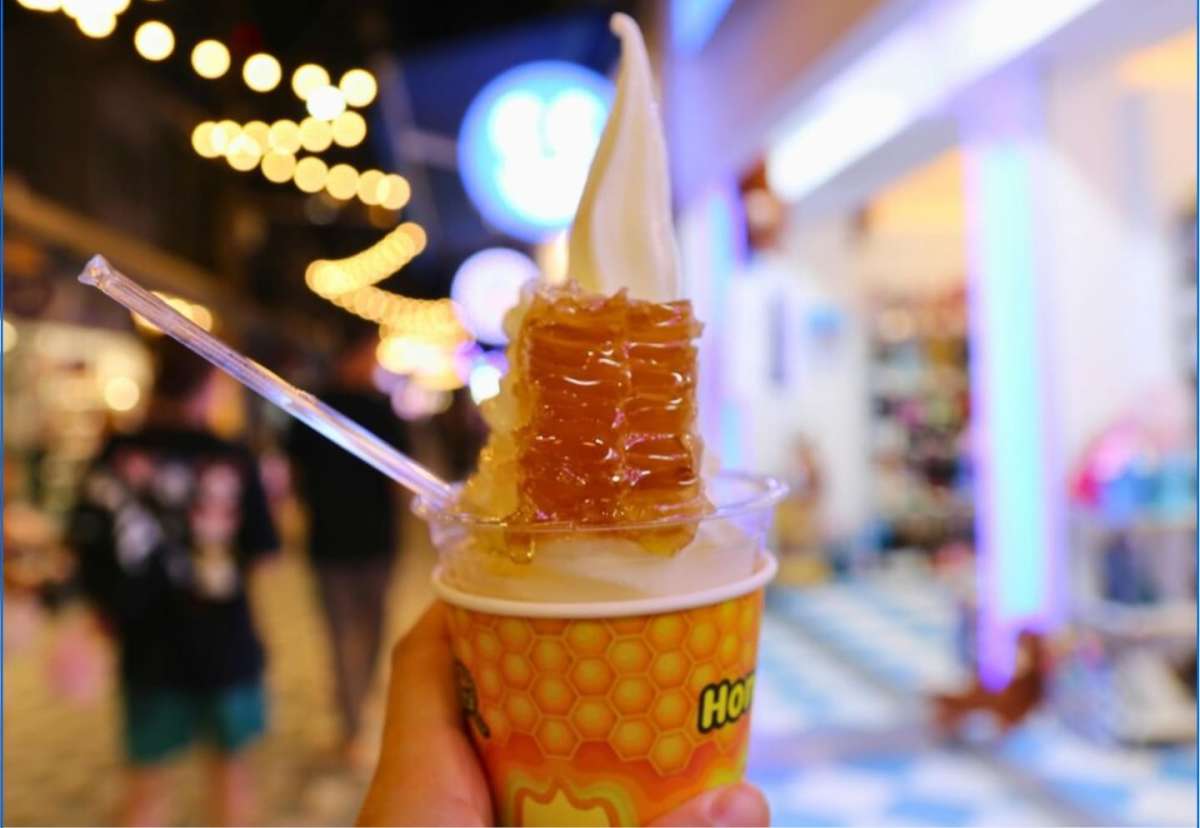 Photo by Bruna Santos
The street food in Busan reminds travelers that the food culture in South Korea changes according to geography.
Jeonju has been commonly referred to as a food city, yet that has been kept in check by Nambu Market. The market transforms in the evening when food stalls are launched between ordinary shops.
The ambiance is local. Workers, families, and travelers dine together. One is not in a hurry to impress, merely to eat food the way it has been cooked.
The Ministry of Culture, Sports and Tourism of South Korea is marketing Jeonju as a cultural food tourist destination due to the fact that it does not re-invent regional cooking practices but safeguards them.
Street food in South Korea succeeds since it is part of everyday life. The Korea Tourism Organization notes that food attractions are always among the most memorable experiences that the traveler will not forget visiting the country, particularly the attractions associated with local streets, but not restaurants.
Street food eliminates distance. It puts tourists in a habit, not out of it. Eating is observed, participated in, and connected simultaneously.