
Toughest Trek in India: High-Altitude Challenges That Test Mind, Body, and Mountain Skills
Extreme Himalayan Routes That Test Endurance, Skill, and Mental Strength
Toughest Trek In India

India offers hundreds of trekking routes, from beginner forest trails to extreme glacier crossings. But when we talk about the toughest trek in India, we enter a different league. These routes demand serious endurance, technical ability, glacier travel skills, and mental strength.
This article breaks down the most demanding treks in India based on altitude, terrain, remoteness, weather risk, and documented mountaineering difficulty.
If you believe your weekend cardio makes you invincible, the Himalayas might politely disagree.
What Makes a Trek the Toughest in India?
Before we name the winner, let’s define difficulty properly.
A trek becomes extremely difficult when it includes:
Altitudes above 5,000 meters
Glacier crossings and crevasse zones
Technical sections using rope and ice axe
Remote evacuation access
Rapid weather shifts
Multi-week endurance requirements
The Himalayas stretch across northern India and include some of the most complex terrain on Earth. The Himalayas are young fold mountains. That means unstable rock, shifting glaciers, and unpredictable weather. Nature does not simplify things here.
Now let’s look at the most serious contenders.
1. Auden's Col Trek
Auden’s Col trek stands as one of the strongest contenders for the toughest trek in India due to its technical glacier crossings, isolation, and high-risk terrain. This demanding expedition connects Gangotri to Kedarnath through the rugged Khatling Glacier system and requires serious mountaineering skills rather than basic trekking experience. Teams navigate crevasse-prone snowfields, unstable moraine, and steep ice sections while facing unpredictable weather in the Garhwal Himalayas. Rescue options remain limited, which increases the psychological and physical pressure throughout the journey.
Location: Uttarakhand (Gangotri to Kedarnath)
Altitude: ~5,490 meters
Duration: 15–16 days
Requires rope, crampons, and glacier skills
Suitable only for experienced trekkers
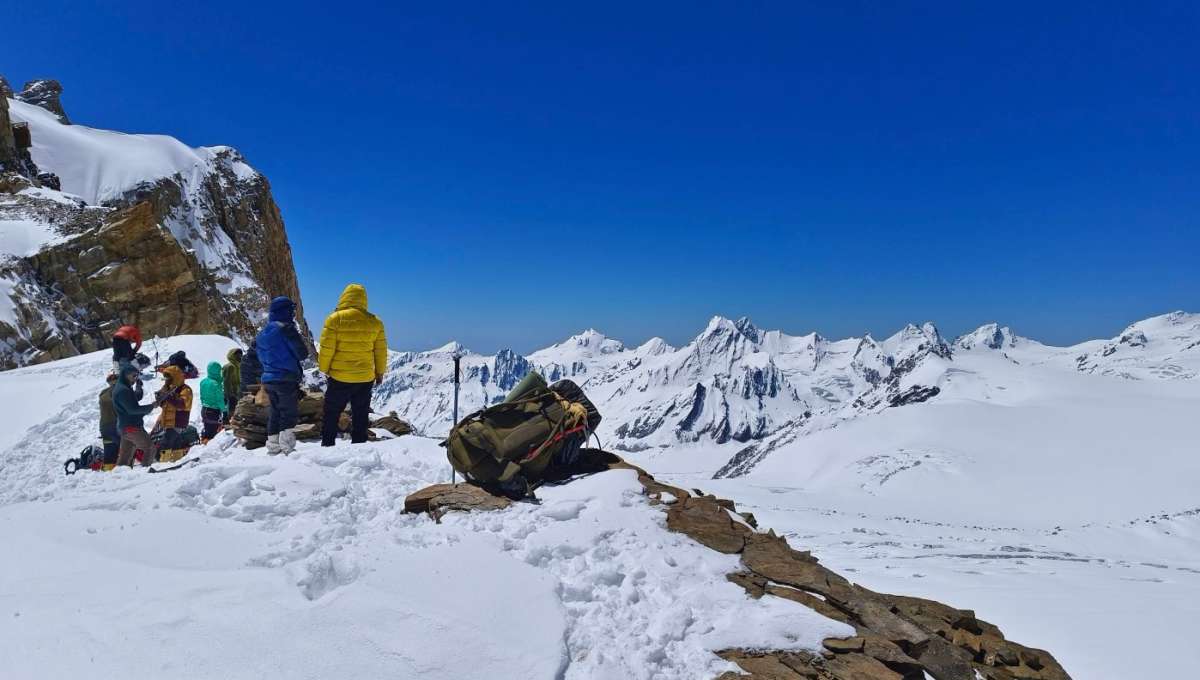 Auden col Trek
Kalindi Khal rises to nearly 5,950 meters and crosses one of the most dramatic glaciated regions in the Indian Himalayas. The route connects Gangotri with Ghastoli near Badrinath and demands full glacier navigation skills. Trekkers move through snow bridges and crevasse zones while thin air slows every step. Its altitude and technical exposure make it one of India’s most serious high-altitude crossings.
Location: Uttarakhand (Gangotri to Badrinath region)
Altitude: ~5,942 meters
Heavy glacier terrain
Inner Line Permit required
Best attempted June to September
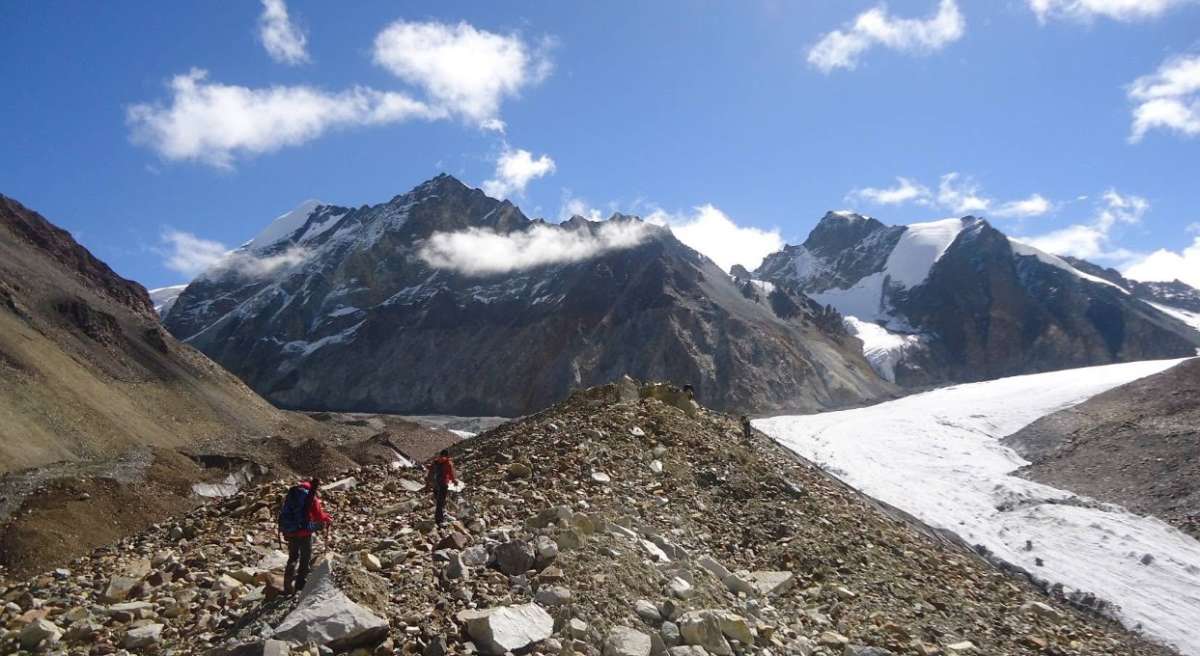 kalindikhal Trek
3. Stok Kangri Trek
Stok Kangri, located near Leh in Ladakh, gained fame as one of India’s highest trekking peaks before authorities restricted climbing activities for ecological recovery. At over 6,000 meters, altitude becomes the primary challenge. The summit push begins at night and tests endurance in oxygen-deprived conditions. While less technical than glacier passes, the height alone makes it brutally demanding.
Location: Ladakh (near Leh)
Altitude: ~6,153 meters
Midnight summit climb
High risk of altitude sickness
Requires strong acclimatization
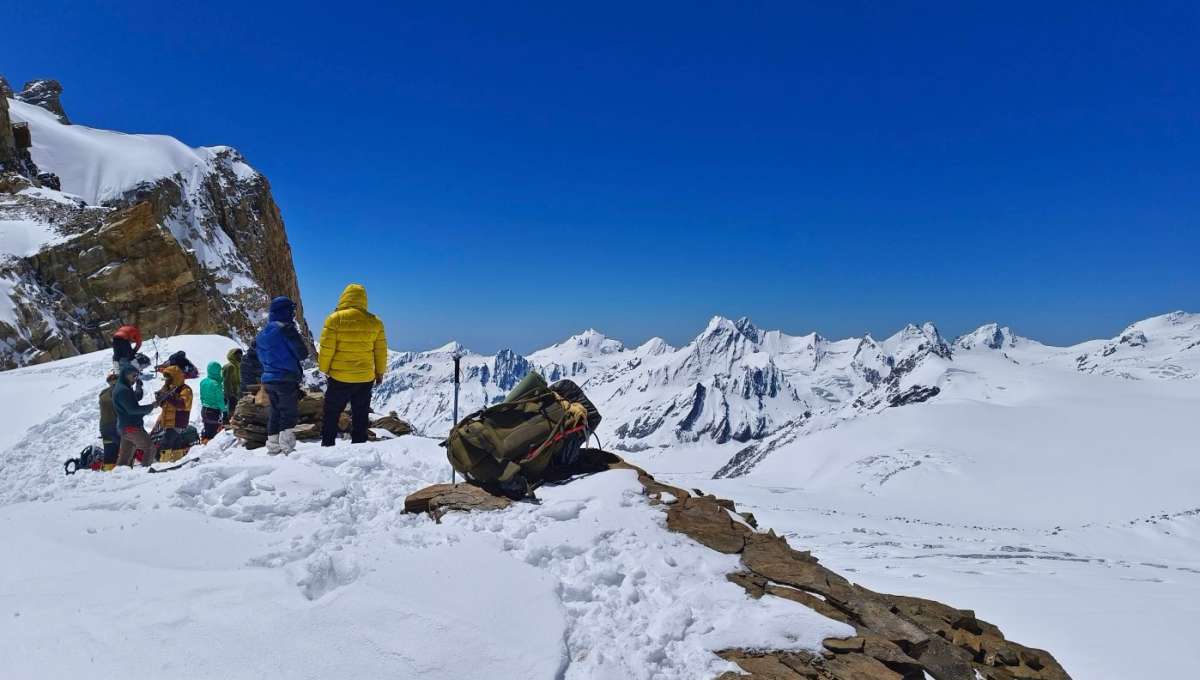 Stok Kangri Trek
4. Pin Parvati Pass Trek
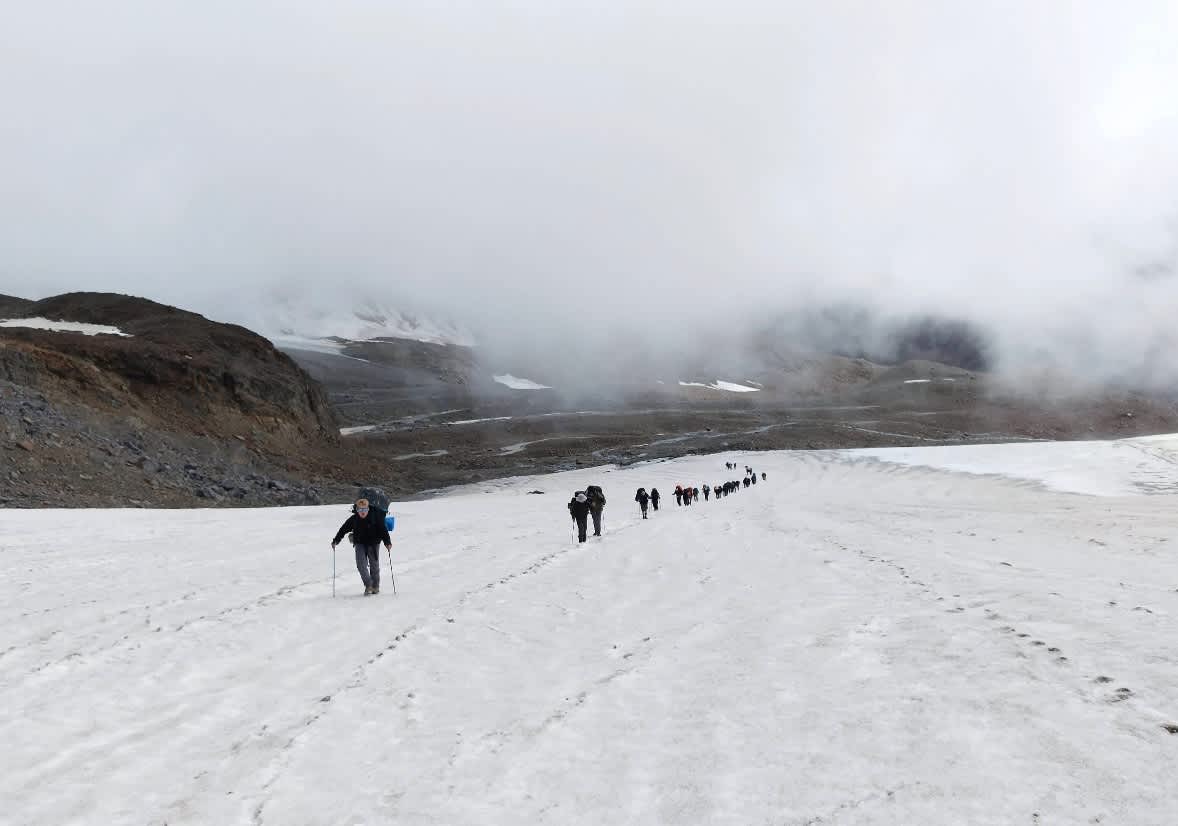
Pin Parvati Pass combines length, isolation, and high-altitude glacier crossings into one exhausting expedition. The trek connects the lush Parvati Valley with the stark Pin Valley, offering dramatic landscape shifts. Long walking days, river crossings, and snowfields gradually drain energy, making it one of the most physically demanding Himalayan treks.
Location: Himachal Pradesh (Parvati Valley to Pin Valley)
Altitude: ~5,319 meters
10–12 days duration
Glacier and river crossings
Demands strong stamina
 Pin Parvati Pass Trek
5. Lamkhaga Pass Trek
Lamkhaga Pass links Kinnaur in Himachal Pradesh with Harsil in Uttarakhand through remote alpine terrain. The route crosses rocky ridges, snow slopes, and glacier sections with minimal external support. Weather shifts quickly in this region, and trekkers must rely on navigation skills and steady pacing to complete the crossing safely.
Location: Himachal Pradesh to Uttarakhand
Altitude: ~5,282 meters
Remote and less commercial
Long approach marches
Requires endurance and planning
6. Goecha La Trek
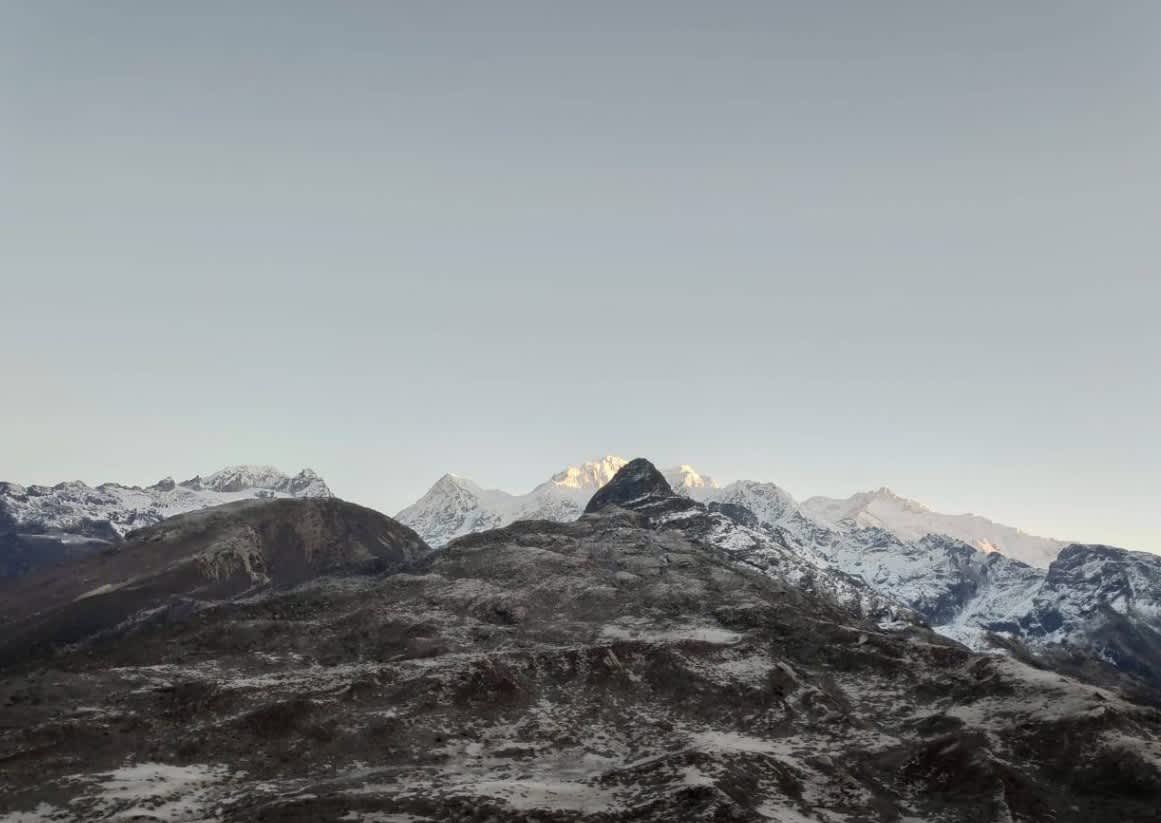
Goecha La offers one of the closest trekking views of Kangchenjunga while pushing trekkers to high altitude in unpredictable Himalayan weather. The steep ascents, early morning summit attempts, and thin air make it physically intense. Snow conditions and sudden cloud cover add further complexity.
Location: Sikkim
Altitude: ~4,940 meters
Close views of Kangchenjunga
Steep gradient sections
Cold and windy conditions
 Goechala Trek
7. Rupin Pass Trek
Rupin Pass challenges trekkers with dramatic terrain changes, hanging villages, waterfalls, and a steep snow climb near the summit ridge. The final ascent demands careful footwork on snow slopes. Rapid elevation gain and unpredictable weather increase the trek’s difficulty level.
Location: Uttarakhand to Himachal Pradesh
Altitude: ~4,650 meters
Steep summit climb
Snow crossings in early season
Technical sections near pass
8. Baraadsar Lake Trek
Baraadsar Lake remains one of the least explored and most isolated high-altitude treks in Himachal Pradesh. The route passes through dense forests, alpine meadows, and exposed ridgelines before reaching the sacred lake. Limited trail markings and isolation make navigation difficult.
Location: Himachal Pradesh (Chanshal region)
Altitude: ~4,570 meters
Remote and rarely attempted
Long forest approaches
Requires strong navigation skills
9. Kang Yatse II Trek
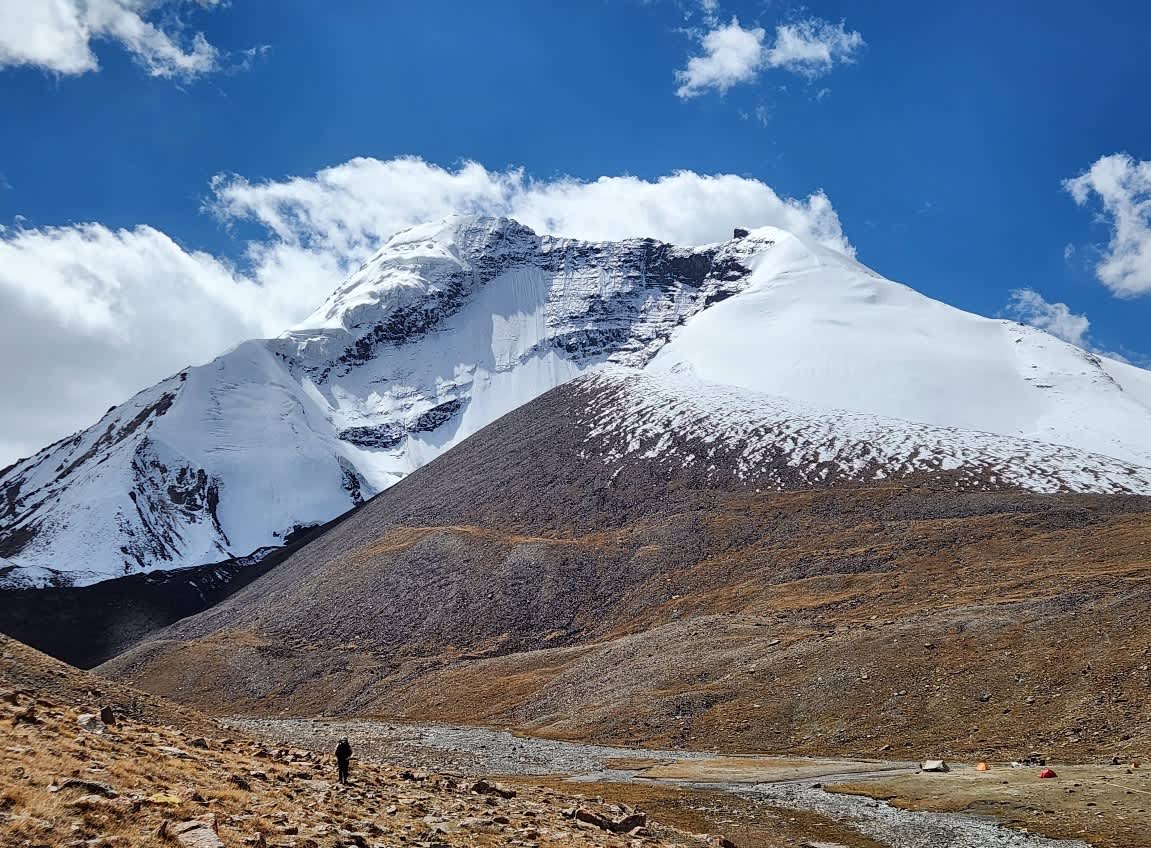
Kang Yatse II in Ladakh offers a serious high-altitude climbing experience that bridges trekking and mountaineering. The summit climb includes snow slopes and exposed ridges. At above 6,000 meters, oxygen scarcity becomes the biggest challenge, and proper acclimatization remains critical.
Location: Markha Valley, Ladakh
Altitude: ~6,250 meters
Snow and ice summit section
Requires basic mountaineering gear
High-altitude endurance test
 Kang Yatse Trek
10. Friendship Peak Trek
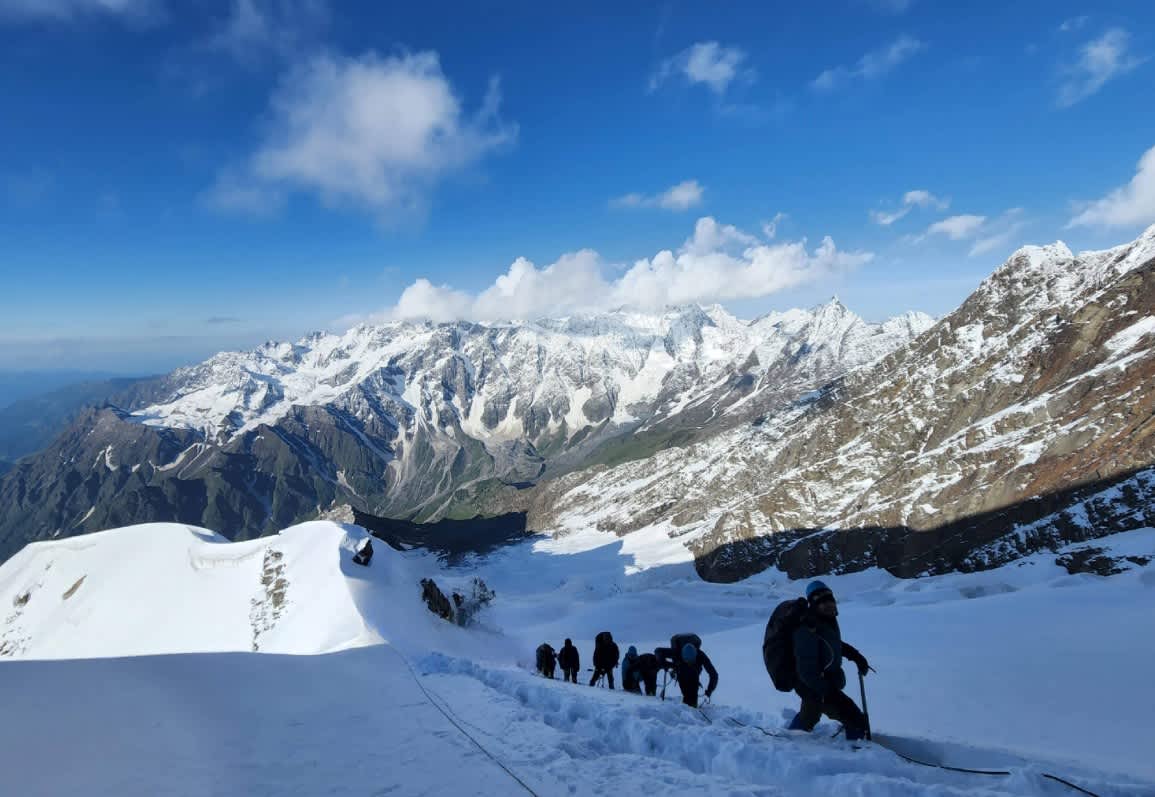
Friendship Peak, located near Manali, stands as one of the most accessible yet demanding trekking peaks in Himachal Pradesh. Though shorter in duration compared to glacier passes, it requires rope work and snow climbing skills near the summit. The altitude and steep gradient push trekkers beyond beginner level comfort.
Location: Himachal Pradesh (near Manali)
Altitude: ~5,289 meters
Snow and glacier sections
Requires basic mountaineering course recommended
Steep summit ridge
 Friendship Peak Trek
So, Which One Truly Deserves the Title?
Based on altitude, technical difficulty, glacier complexity, remoteness, and mountaineering consensus, Auden’s Col usually earns the reputation as the toughest trek in India.
Here is why:
Requires technical glacier travel
Demands prior high-altitude experience
Involves risky crevasse navigation
Limited evacuation options
Frequently classified as an expedition
Kalindi Khal closely follows and may surpass it in altitude challenge. However, most seasoned mountaineers and expedition leaders in Uttarakhand often rank Auden’s Col at the top due to consistent technical exposure.
Physical and Mental Preparation for Extreme Himalayan Treks
You cannot prepare for these treks in a single month.
Serious preparation includes:
Cardiovascular training for 3 to 6 months
Strength training focused on legs and core
Practice with backpack loads
Prior high-altitude exposure
Basic mountaineering course certification
Mental preparation matters just as much. Weather delays, altitude headaches, and long summit days require patience and emotional stability.
The mountain does not negotiate with impatience.
Safety, Permits, and Environmental ResponsibilityMost of these treks require:
Forest permits
Inner line permits in some regions
Expedition registration
Certified guide support
Always verify current regulations through official state tourism departments or recognized mountaineering bodies.
The Himalayas face glacier retreat and environmental stress. The International Centre for Integrated Mountain Development has repeatedly highlighted climate impacts in the Himalayan region.
Trekkers must:
Carry back all waste
Avoid single-use plastics
Respect local communities
Follow Leave No Trace principles
Extreme adventure should not mean extreme damage.
Final Thoughts
The toughest trek in India is not about bragging rights. It represents discipline, preparation, and respect for high-altitude wilderness.
For most mountaineers, Auden’s Col stands at the top of the difficulty scale. Kalindi Khal follows closely. Stok Kangri, Lamkhaga Pass, and Pin Parvati Pass also demand serious commitment.
If you want to attempt any of these routes, build experience step by step. Start with moderate high-altitude treks. Learn glacier basics. Train seriously.
The Himalayas reward humility, not hurry.
And remember, the mountain does not care about your Instagram. It cares about your preparation.
Choose wisely. Train properly. Trek responsibly.