

Cracked Stucco? Here’s What Property Owners Should Know
Learn why stucco cracks, how to assess damage, and the best repair options to protect your property and maintain curb.

If you’re staring at a hairline crack running across your exterior wall and wondering whether it’s cosmetic or a warning sign, you’re not alone. Most property owners don’t think much about stucco until something shows up. And when it does, it’s usually a crack.
The real question behind “cracked stucco” isn’t just what caused it. It’s this: Is my building at risk, and how much is this going to cost me?
After years working around exterior envelope systems—both residential and light commercial—I can tell you this: not all cracks are equal. Some are harmless shrinkage. Others are quietly letting water into your framing. Knowing the difference is where smart decision-making starts.
What Is Stucco, Really?
Stucco is a cement-based exterior cladding system typically made from Portland cement, sand, lime, and water. Traditional three-coat stucco is applied over metal lath and a weather-resistant barrier. There’s also synthetic systems like EIFS (Exterior Insulation and Finish System), which behaves differently.
The material is rigid. That’s both its strength and weakness.
Rigid materials don’t flex much when a building moves. And buildings always move—thermal expansion, minor settlement, framing shrinkage, seismic activity in certain regions. Over time, stress builds. Cracks form.
That’s normal to a point.
According to the Portland Cement Association, cement-based products will naturally shrink slightly as they cure. Micro-cracking can happen even when installation was done properly.
What matters is size, pattern, and location.
Types of Stucco Cracks (And What They Usually Mean)
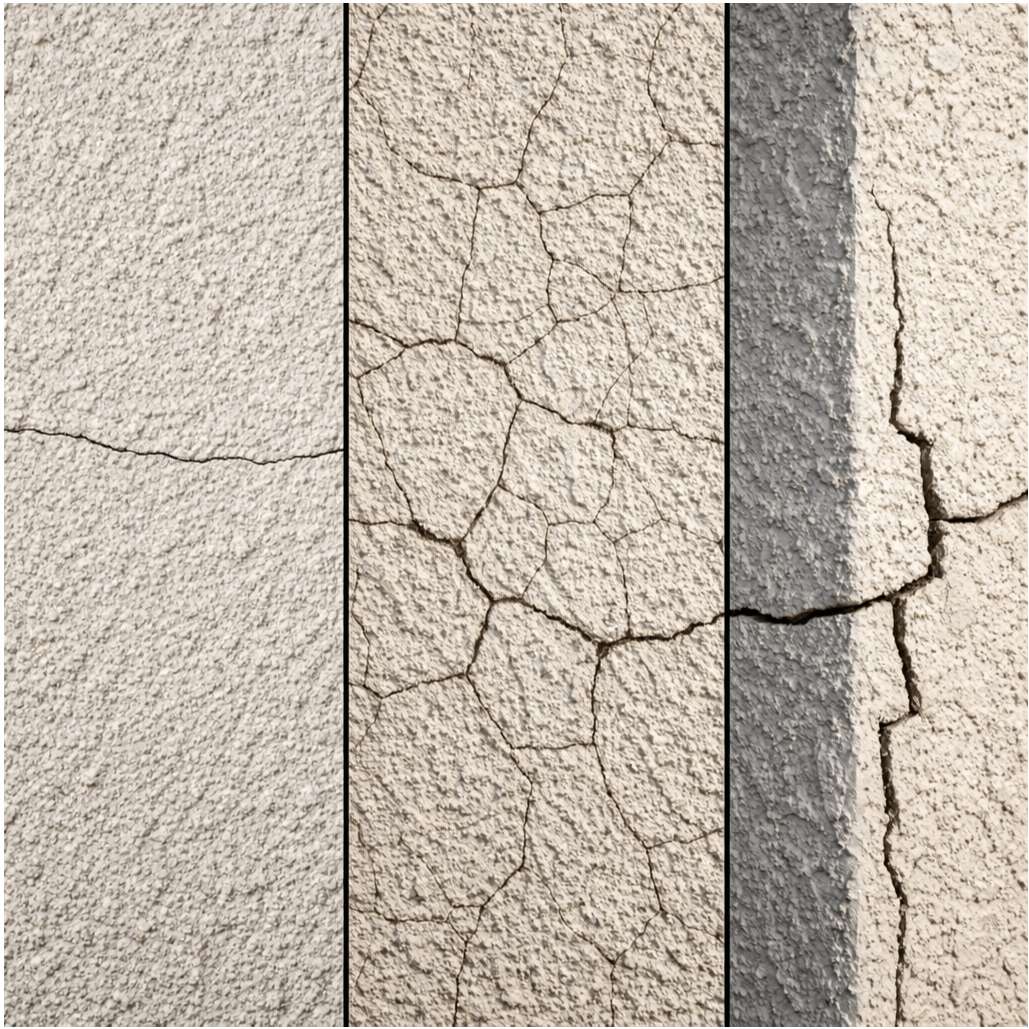
These are thin, often less than 1/16 inch wide. You’ll see them around windows, doors, or long wall spans.
In most projects I’ve seen, hairline cracks are cosmetic. They’re often caused by normal curing shrinkage or temperature changes. If they aren’t widening over time, they usually don’t require structural repair.
Still, they shouldn’t be ignored forever.
Water can penetrate surprisingly small openings, especially in wind-driven rain climates.
These look like a web or random pattern across the surface. They’re usually shallow and caused by improper mixing ratios or rapid drying during application.
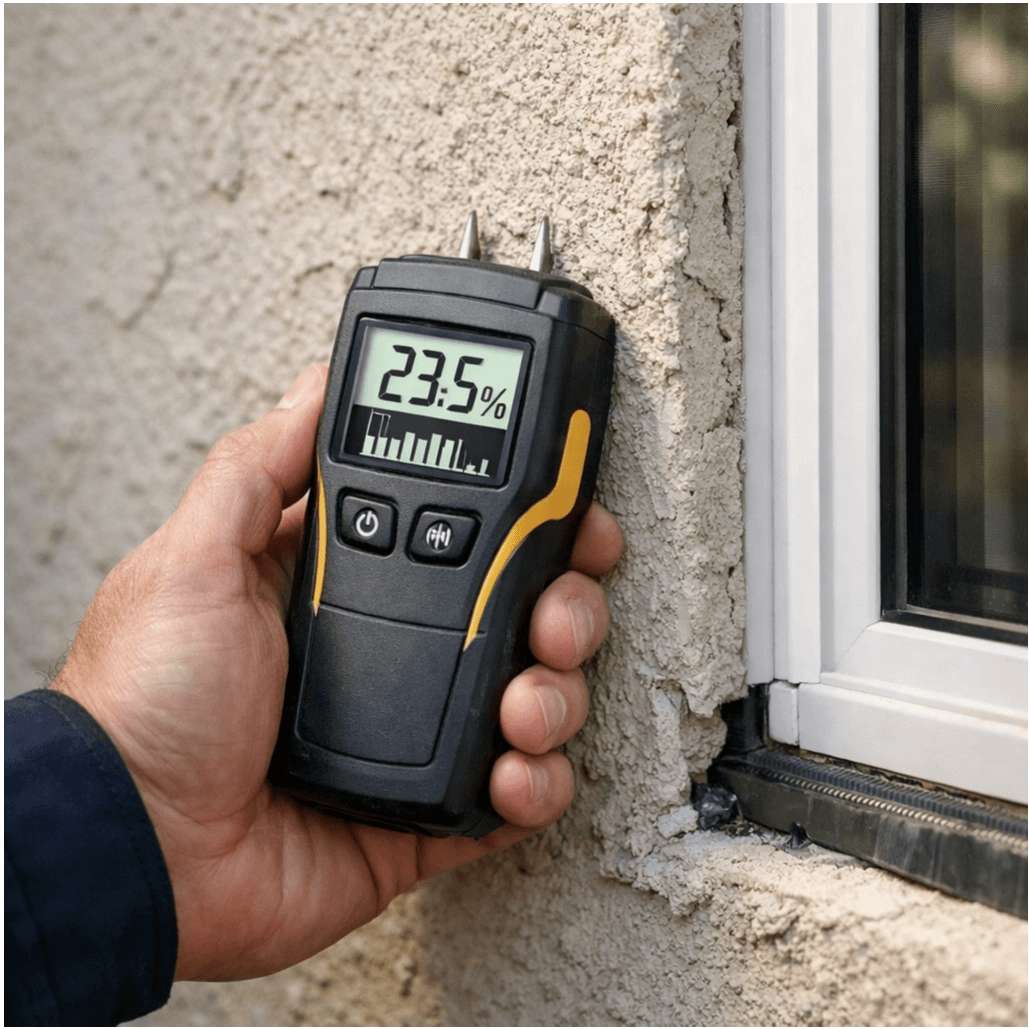
Here’s where things get interesting. I’ve walked properties where the owner assumed spider cracking was purely cosmetic, but moisture testing revealed elevated readings behind the finish. It wasn’t catastrophic, but it required sealing and localized patching before it got worse.
Sometimes a cement mix was too rich. Sometimes the substrate wasn’t properly prepped. Either way, the finish coat suffered.
Now we’re entering more serious territory.
Vertical cracks near corners or foundation lines can indicate minor settlement. Stair-step cracks following block joints are often related to foundation movement.
If you see displacement—meaning one side of the crack is slightly higher than the other—don’t brush it off. That’s movement.
Structural engineers I’ve worked with typically recommend monitoring width over 30–60 days. If the crack grows, further evaluation is needed.
The International Code Council provides general guidance for exterior wall assemblies, but crack severity assessments often depend on regional building conditions.
Horizontal cracks are less common and more concerning. They can signal structural stress, framing deflection, or improper lath attachment.
In one commercial facade project I inspected, horizontal cracking developed because the control joints were spaced incorrectly. The installer skipped them to “save time.” It cost the property owner far more later.
Shortcuts in cosntruction rarely stays hidden. More details on common stucco issues and how they develop are available at Alston Stucco.
Why Stucco Cracks in the First Place
Let’s get practical.
Here are the most common causes I’ve encountered in the field:
Improper curing (too fast drying)
Poor mix ratios
Lack of control joints
Framing movement
Foundation settlement
Water intrusion behind the system
Low-quality materail
Inadequate lath fastening
A common mistake is assuming the finish coat alone determines performance. It doesn’t. Stucco is part of a wall assembly. If the weather barrier, flashing, or expansion joints were poorly installed, the exterior surface eventually shows stress.
And yes, climate matters. Properties in freeze-thaw zones experience more cracking because trapped moisture expands during freezing. Homes in arid climates often show shrinkage cracks from rapid drying.
Costs differ on cities and weather exposure too.
When Is a Stucco Crack Serious?
Here’s a simple field rule many contrctor use:
Under 1/16 inch and stable → Usually cosmetic
Wider than 1/8 inch → Needs evaluation
Showing displacement → Investigate immediately
Allowing visible moisture intrusion → Repair urgently
But I’ll add something more nuanced. If cracking appears around windows or roof intersections, I pay closer attention. Those areas are already vulnerable to water intrusion.
Water is the real enemy. Not the crack itself.
Moisture trapped behind stucco can rot sheathing, corrode fasteners, and create mold risk. By the time interior drywall stains appear, damage may have been happening for years.
That’s why some inspectors use infrared scanning or moisture meters to check behind walls. It’s not always necessary, but in higher-risk cases it’s smart.
The U.S. Department of Housing and Urban Development has published guidance on moisture management in exterior wall systems, emphasizing drainage and flashing details as critical components.
Lessons from real projects highlight the costs of overlooking these issues; one detailed account of common stucco mistakes and their consequences is documented in this stucco case study
Repair Options: Patch, Recoat, or Replace?
This is where property owners often overspend—or underspend.
Hairline cracks can often be sealed with elastomeric caulk or acrylic patch compounds. After sealing, repainting with an elastomeric coating adds flexibility and waterproofing.
It’s relatively affordable. Quick. Effective for small areas.
But surface patching doesn’t fix underlying movement. If the structure keeps shifting, cracks may return.
Localized Stucco Patching
For moderate cracking, sections of stucco are cut out and rebuilt. This includes:
Removing damaged stucco
Inspecting sheathing and lath
Reinstalling weather barrier if needed
Applying new base and finish coats
Matching texture can be tricky. Experienced crews can blend it well, but sometimes color differences show slightly.
In my experience, localized repairs works best when underlying framing is stable.
Full Re-Stucco or System Replacement
This is the expensive option. And sometimes it’s necessary.
If widespread cracking is paired with moisture damage behind the wall assembly, patching becomes temporary at best. Replacing the entire system ensures flashing, control joints, and waterproofing are properly installed.
I’ve seen owners delay full replacement for years, only to end up paying for interior repairs later. Water doesn’t wait politely.
Still, full replacement should be a last resort after proper assessment.
Cost Expectations (Ballpark)
Prices varies depending on region and scope, but here’s a rough idea:
Hairline crack repair: $300–$1,000
Localized patching: $1,500–$5,000
Large-scale repair: $8,000–$25,000
Full re-stucco: $12–$20 per square foot in many U.S. markets
Labor rates and scaffold access changes everything. Two-story homes cost more. Commercial facades even more.
Always get detailed proposals. Ask what’s included. Ask how they handles flashing and control joints.
If a bid seems suspiciously low, it probably is.
Can You Prevent Stucco Cracking?
You can’t eliminate all cracking. But you can reduce the risk.
Here’s what works:
Ensure proper control joint spacing
Maintain caulking around windows and penetrations
Keep roof drainage systems functioning
Address foundation drainage issues
Use breathable, high-quality exterior coatings
One overlooked factor is landscaping. Irrigation systems spraying directly onto stucco accelerates deterioration. I’ve seen beautiful facades slowly weaken because sprinklers hit the wall daily.
Small detail. Big impact.
Should You Hire a Specialist?
If cracks are minor and stable, you may not need a structural engineer. But if you notice widening gaps, displacement, or moisture symptoms, get a professional opinion.
Look for contractors experienced specifically in stucco remediation—not just general painting.
Ask for:
Project photos
References
Moisture testing approach
Warranty details
And trust your instincts. If someone downplays visible displacement without inspection, that’s a red flag.
How Stucco Issues Affect Property Value
Buyers notice exterior defects quickly. Even cosmetic cracks can raise concerns during inspection.
What most people miss is documentation helps. If repairs were completed properly and documented, it reassures potential buyers.
Ignoring visible cracking, on the other hand, makes buyers assume hidden damage exists—even if it doesn’t.
In competitive markets, that perception matters.
The Real Takeaway
Cracked stucco isn’t automatically a crisis. But it’s never something to ignore completely.
Small cracks? Monitor and seal them.
Growing or displaced cracks? Investigate.
Moisture signs? Act quickly.
From a project management standpoint, early intervention always cost less than delayed repairs. I’ve rarely seen that not be true.
Exterior wall systems are protective shells. Once compromised, secondary damage starts quietly. And quietly is how it gets expensive.
If you’re unsure, schedule an inspection. Get clear answers. Make a decision based on evidence—not guesswork.