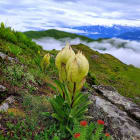

A Family Journey to the Kedarkantha Summit
What lingers most isn’t the summit, but the quiet moments—footsteps in snow, shared smiles, and the hush of the mountain
Our Campsite of Kedarkantha Trek

The morning we left for Uttarakhand felt like the quiet start of something bigger than just another vacation. My parents and younger sister sat beside me in the car as the first light of winter brushed the highway. None of us spoke much. Maybe we were conserving energy, or maybe we were letting the anticipation of the trek settle in. For years we had talked about doing a Himalayan hike together, but daily life always won. This time, we finally committed to the Kedarkantha Trek, a winter adventure that every seasoned traveler calls both rewarding and surprisingly easy-moderate—perfect for beginners yet challenging enough for trekkers who crave an achievement.
We approached Himalayan Dream Treks also called HDT, because previous time the experience of our Dayara Bugyal Trek was so excellent with them.
Our guide, Ravi, met us at the base village of Sankri, a small but prominent stop tucked deep in the Govind Wildlife Sanctuary. The air there felt sharper, as if it had been filtered through miles of pine forest. Ravi had the calm confidence of someone who has led countless treks, and he immediately put my parents at ease. He explained that the summit stood at about 12,500 feet above sea level, a number that sounded abstract until we realized it meant we would climb higher than most peaks in the Appalachians back home. He also described how the Kedarkantha Peak sits proudly among the mighty Himalayas, offering a rare 360-degree view of snowcapped neighbors like Swargarohini, Bandarpoonch, Ranglana, and the dark, mysterious outline of Black Peak—or Kalanag, as the locals say.
Day One: Into the Pines
The first stretch of trail rose gently, the sort of climb that tricks you into thinking trekking is easy. My sister walked beside a group of college students from Delhi who shared their homemade snacks with us—warm parathas wrapped in foil that tasted better than any roadside meal. We laughed about the difference between city winters and this kind of winter. Here, the sunlight provides a brief warmth but the shade reminds you that snow is only a few hours away.
By afternoon, our boots crunched over the first patches of ice. Ravi pointed out distant ridges of the Garhwal Range and told us stories about shepherds who still bring their flocks here in the summer season. He also explained how the trail once served as an ancient route toward Yamunotri, one of the sacred Char Dham pilgrimage sites. Listening to him, I felt a link between the spiritual and the physical, between the rhythm of our footsteps and centuries of travelers who had walked the same path.
That night we stayed in a tented campsite at Juda Ka Talab, a frozen lake ringed by deodar trees. The temperature dropped below freezing, but the trek organizers surprised us with steaming bowls of dal and rice. I remember how the warm metal plate felt in my gloved hands, the simple meal tasting like a feast. Around the fire, we shared stories with other trekkers: a photographer chasing the perfect sunrise shot, a retired couple proving that adventure has no age limit, a student from Mumbai who just wanted to experience this easy to moderate level trek, and a solo traveler from Bangalore who was on her first Himalayan trek. The mix of people made the night feel like a small festival of trekking dreams.
Day Two: Climbing Higher
The next morning, frost decorated the tents. We started early, our breath visible in the icy air. The trail grew steeper and the forest thinner. Snowflakes drifted through the trees like quiet confetti. My mom, normally cautious, found her rhythm and surprised all of us with her steady pace. Ravi grinned and said she had the heart of a seasoned mountaineer.
By midday we reached our second camp at Kedarkantha Base. Here, the world opened. The tree line gave way to wide alpine meadows where we could see the Range—a perfect sweep of white peaks and blue sky. Children from a nearby village had built a tiny snow shrine, a local tradition to honor Lord Kedar, another name for Shiva. My sister helped them add a garland of pine needles, her laughter echoing across the silent slopes.
Dinner that night included hot soup, chapati, and a sweet rice pudding the cooks called kheer. Food at altitude has a way of tasting far richer than at sea level, and we savored every bite. Ravi briefed us on the next day’s early summit attempt. “It’s not a race,” he reminded us. “The climb is steady, but the reward is beyond words.”
Summit Morning: The True Climb
We woke at 3:00 a.m., stars scattered like crushed diamonds across the sky. Headlamps flickered on as we began the final push. The trail was a mixture of crunchy snow and icy patches that demanded careful footing. As dawn approached, the eastern horizon glowed orange and pink, the colors of a slow-burning fire.
Reaching the summit of Kedarkantha felt like stepping into a dream. At 12,500 feet, the world stretched endlessly. The 360-degree panorama revealed the entire Himalayas, from the Swargarohini Range to the unmistakable silhouette of Mt. Bandarpoonch, the dark crest of Black Peak, and the distant shimmer of Mt. Ranglana. My father stood quietly, eyes closed, as if absorbing every detail into memory. My sister spun in slow circles, whispering that it felt like standing at the center of the world.
I found a small rock and sat down, letting the thin air fill my lungs. There was no rush, no need for fast reading of the landscape—just calm. The view provides a reminder of how tiny and yet connected we are. We took family photos, of course, but the true reward was that shared silence.
The Descent and Afterglow
Going down is often harder than climbing. The sun softened the snow, turning parts of the trail slippery. At one point my mom slipped and landed with a surprised laugh, which set all of us giggling. Ravi taught us a playful technique he called the “mountain slide,” where you sit and glide down short snowy slopes. It turned the descent into a childlike game.
Back at Sankri, we celebrated with plates of hot pakoras and chai. The village felt warmer now, not just because of altitude but because we had earned every step. Other trekkers we’d met along the way joined us, swapping stories of minor mishaps and favorite moments. One hiker described how the Kedarkantha Trek is often recommended as the perfect introduction to Himalayan trekking, a moderate level climb that still gives the sense of true expedition. Another spoke about coming back in spring to see the meadows bloom, proving that the mountain is never the same twice.
Reflections
Days later, as we drove back toward Dehradun, I thought about what this journey really meant. It wasn’t only about ticking off one of the most popular treks in India or standing at an impressive altitude above 12,500 feet. It was about the quiet achievements—the way my parents found strength in the cold, the conversations with strangers who became friends, the small acts of kindness like sharing tea or adjusting someone’s pack.
The Kedarkantha Trek shows that a mountain can be both a personal challenge and a communal celebration. It welcomes beginners while still satisfying the seasoned trekkers seeking a new achievement. The trail teaches patience, reminding you that every step is its own reward, and that the summit is just one part of the story.
For my family, it became a chapter we will revisit in countless retellings: the calm climb through pine forests, the frozen lake under starlight, the mighty peaks standing guard as we touched the sky. In a world that often urges speed, the Himalayas offered us a journey at the perfect pace—one where every moment, every shared laugh, every slow breath of thin, cold air felt exactly right.