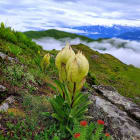

Kedarkantha Trek: The Best Himalayan Trek for Beginners
Here is complete guide about Kedarkantha Trek including itinerary, best time, difficulty, preperation, route, and more.
Kedarkantha trek complete guide

The Kedarkantha Trek stands among the most welcoming and rewarding treks for beginners. Located in the Govind Pashu Vihar National Park in Uttarkashi, Uttarakhand, this trail is known for its snowy winter forests, a frozen alpine lake, and a summit ridge that opens to one of the finest 360-degree Himalayan panoramas.
Kedarkantha Trek is an easy to moderate level trek perfect for both beginners and experienced trekkers. The trek holds an important place among the most popular winter treks in Uttarakhand. Reaching a maximum altitude of about 12500 ft (3,810 m), the Kedarkantha peak offers a complete view of the mighty Himalayas, including Mt. Swargarohini, Mt. Bandarpoonch, Black Peak, Ranglana Range, and Yamunotri Range. It truly feels like an achievement to reach the summit after the challenging final climb.
Covering a total distance of around 20 km, the route gradually ascends to the Kedarkantha base camp before continuing with a steep climb to the summit. The trail passes through dense forests of oak, rhododendron, and pine, along with the frozen lake of Juda Ka Talab, open meadows, untouched snowfields, and several clear mountain streams. This route is popular among trekkers for its scenic beauty and panoramic views, especially during the winter months from December to March.
Understanding the Kedarkantha Trek Route
The journey begins at Sankri, a charming village about 200–220 km from Dehradun. The drive itself is scenic, passing through Mussoorie, Purola, and the Tons River valley. From Sankri, the trail rises gradually through dense oak and pine forests before opening into clearings that lead to Juda Ka Talab—a high-altitude lake that often freezes into a solid sheet of ice in winter.
Beyond Juda Ka Talab, the trail climbs toward Kedarkantha Base Camp, an open meadow positioned right below the summit cone. Here, trekkers often get their first wide-angle view of Himalayan ranges such as Swargarohini, Bandarpunch, Kala Naag, and the Yamunotri–Ranglana belt.
 Trek Route Map of Kedarkantha
Although the trek is rated easy to moderate, each day brings a different level of challenge. The summit day, which begins around 3 AM, is the toughest due to steep gradients and icy sections. Yet reaching the summit at sunrise—when the entire western Garhwal Himalaya glows gold—is an unmatched reward for the effort.
A Detailed 4N/5D Itinerary
Day 1 – Dehradun to Sankri
The drive from Dehradun to Sankri takes around nine hours. Mountain roads, river crossings, and forested stretches make the journey scenic and immersive. Trekkers usually settle into a homestay, prepare gear, meet their trek leader, and rest for the night.
Day 2 – Sankri to Juda Ka Talab
The trek officially begins with a steady 4 km climb through thick forest. The canopy keeps the trail cool and quiet. Juda Ka Talab appears at the end of this ascent, surrounded by pine trees and, in winter, completely frozen over.
Day 3 – Juda Ka Talab to Kedarkantha Base Camp
The next 4 km continue upward through wide clearings and scattered forest sections. As the trail rises, views open up toward distant snow ridges. Base Camp sits in a broad meadow where sunsets are especially dramatic. In peak winter, nighttime temperatures can dip well below –10°C.
Day 4 – Summit Return to Sankri
Summit push begins around 3 AM using headlamps. The first stretch is moderate, but the final ridge becomes steep, with 40–60 degree gradients and icy patches. The summit, marked by a Trishul and prayer flags, provides one of the best 360-degree winter panoramas in the Indian Himalayas. After the summit, trekkers descend all the way to Sankri—long, tiring, but extremely fulfilling.
Day 5 – Sankri to Dehradun
The final day is a relaxed drive back to Dehradun, ending the trek.
Alternative 5N/6D Route
Some trekkers opt for a gentler itinerary with a night halt at Hargaon on the return. This longer descent reduces knee strain and is ideal for beginners who want a more relaxed pace.
This extended itinerary helps with:
Smoother acclimatization
Less pressure on knees during descent
More time to enjoy forest campsites
Best Time to Visit
Kedarkantha is known primarily as a winter trek, with its famous snow-covered forests and frozen lake.
Winter (December–April):
Snow blankets the entire route. Night temperatures can fall to –15°C or even –20°C in peak months. Juda Ka Talab transforms into a white, solid ice sheet.
Spring (March–April):
Snow begins melting but remains on upper sections. Days are more comfortable and skies stay clear.
Autumn (October–November):
Dry trails, golden forests, and crisp weather make this an excellent non-snow option.
Monsoon:
Avoided due to slippery, leech-prone trails and unpredictable weather.
Difficulty Level and Trail Challenges
Though categorized as easy to moderate, the trek has moments that challenge beginners. The climb from Sankri to Juda Ka Talab is the easiest, with a gentle gradient and continuous forest cover. The approach to Base Camp is moderate.
The true challenge is summit day, where:
Steep gradients test stamina
Icy sections require careful footing
Cold winds can slow pace
Early start (3 AM) demands discipline
Despite these factors, thousands of first-timers complete the trek safely each year by following their guide’s instructions and maintaining a steady rhythm.
Weather, Temperature, and Camping Experience
Nights at Juda Ka Talab and Base Camp are often described as bone-chilling. Even layered clothing struggles to hold heat until sleeping bags warm up. Campsites may also be windy. But these nights come with crystal-clear skies and star-filled views that many trekkers call unforgettable.
Daytime temperatures are milder, though wearing thermals while trekking is discouraged because it causes overheating and dehydration. Light, breathable layers work better for movement.
How to Prepare Physically
Proper preparation makes the trek significantly more comfortable. A commonly suggested fitness benchmark for Kedarkantha trek is being able to run 5 km in 35 minutes, ensuring good aerobic capacity.
Helpful training components include:
Squats and stair climbs for leg strength
Push-ups and shoulder exercises for backpack load
Short hikes with a loaded backpack for endurance
A backpack for this trek should ideally not exceed 7 kg
Clothing, Gear, and Essentials
Layering is the foundation of trekking comfort. A moisture-wicking base layer, fleece mid-layer, and padded jacket form the core system. Thermals are best kept for nighttime.
Other essentials include:
Waterproof ankle-high trekking shoes
Woolen socks
UV-protection sunglasses (mandatory in snow)
A reliable headlamp for the summit climb
Balaclava, wool cap, gloves
Sunscreen and lip balm
2–3 litres of water in a hydration pouch
Trekking pole for icy sections
Food, Hydration & Altitude Care
Hydration is directly linked to altitude comfort. Trekkers should drink 3–4 litres of water daily. ORS and energy bars help during long stretches, especially on summit day where water sources are absent.
Some trekkers use Diamox for acclimatization, but it should be taken responsibly and only when necessary.
Solo Trekking Possibilities
Kedarkantha is one of the few Himalayan treks where solo trekking is genuinely feasible. The trail is well-marked, the region sees consistent trekking activity, and Sankri offers extremely budget-friendly homestays—sometimes as low as ₹200 per night.
Buses from Dehradun depart early in the morning (5:30 AM, 6:00 AM, 7:00 AM), making the journey convenient.
However, winter solo trekking demands extra caution because:
Snow covers trail markers
Side trails near Juda Ka Talab can mislead
Navigation mistakes are more likely in fog or fresh snowfall
Only experienced or prepared solo trekkers should attempt it in deep winter.
Frequently Asked Questions (FAQs)
1. Is Kedarkantha suitable for complete beginners?
Yes, Kedarkantha is considered one of the most beginner-friendly summit treks in the Indian Himalayas. The trail is clearly defined, the altitude is moderate, and the daily distances are manageable for anyone with basic fitness. The only demanding section is the summit climb, which has steep gradients and icy patches in winter. With proper preparation, layering, and listening to the trek leader, even first-time trekkers complete it comfortably.
2. How difficult is the summit day really?
Summit day is the most challenging part of the trek. The climb begins around 3 AM in freezing temperatures and requires trekking in the dark using a headlamp. The final stretch includes steep inclines that can feel tiring, especially when the snow becomes hard or slippery. However, the difficulty is manageable when trekkers move slowly and use proper gear like a trekking pole and good shoes. The sunrise at the summit makes every bit of effort worth it.
3. What is the best month to trek Kedarkantha?
The ideal time depends on the kind of experience you want. December to January offers the best snow conditions and the classic winter scenery the trek is famous for. Night temperatures are very low, but the snow views are unforgettable. March to April is perfect if you prefer milder weather with some remaining snow. If you want crystal-clear skies without snow, October to November is an excellent season with beautiful golden forests.
4. How cold does it get at the campsites?
Kedarkantha is well-known for its cold winter nights. Temperatures at Juda Ka Talab and Base Camp can drop to –10°C to –15°C, and sometimes even lower in late December. This means that even with thermals, fleece, and good sleeping bags, the first few minutes inside your tent can feel extremely cold. The best way to handle this is through proper layering, staying dry, and warming up your sleeping bag with body heat for a few minutes.
5. Do I need to worry about altitude sickness?
Kedarkantha’s altitude is moderate compared to other Himalayan treks, but mild symptoms like headaches or breathlessness can still occur. Hydration plays a major role in preventing discomfort. Drinking 3–4 litres of water daily, maintaining a slow pace, and avoiding heavy meals during ascent help your body adjust. Most trekkers rarely face serious issues because the itinerary offers a gradual climb with enough time to acclimatize.
6. What kind of fitness is required for this trek?
A good level of basic fitness makes the entire experience enjoyable. Being able to run 5 km in around 35 minutes is a good benchmark for cardiovascular endurance. Strength exercises like squats, stair climbing, and shoulder workouts help in carrying your backpack and managing steep sections. Even if you are not highly athletic, consistent preparation for two to three weeks significantly boosts your comfort on the trail.
7. What should I pack for Kedarkantha in winter?
Winter preparation requires a proper layering system. You need dry-fit base layers, fleece or wool mid-layers, and a padded jacket to trap warmth. Waterproof trekking shoes with ankle support are essential for snow. Warm accessories like gloves, woollen caps, balaclavas, and thick socks help you endure the cold. A headlamp is mandatory for summit day, and sunglasses protect your eyes from snow glare. Sunscreen, lip balm, and a 2–3 litre hydration pouch complete the essentials.
8. Is the trek safe for solo trekkers?
Kedarkantha is one of the safest Himalayan treks for solo travelers due to its popularity and well-marked trail. Sankri offers budget accommodation, and the route is busy during the winter season. However, solo trekking in deep winter demands caution. Heavy snow sometimes hides trail markers, and a few side paths near Juda Ka Talab can be confusing. Solo trekkers should carry navigation apps, stay alert for weather changes, and avoid exploring unfamiliar paths during snowfall.
9. Are there washrooms and mobile networks on the trek?
Facilities are basic. Most camps use dry pits or temporary toilet setups. These are hygienic but very different from standard washrooms, so beginners should be mentally prepared. Mobile networks work in Sankri, but once you start trekking, signals become rare or completely unavailable. This digital disconnect is often appreciated by trekkers who come for peace and nature, but important communication should be made before leaving Sankri.
10. What makes Kedarkantha so special compared to other beginner treks?
Kedarkantha stands out because of its perfect mix of accessibility, beauty, and challenge. It offers the experience of a real Himalayan summit, complete with a steep final ascent and a dramatic 360-degree view—something many beginner treks do not provide. The snow-covered forests, the mystical frozen lake, the lively winter camps, and the unforgettable sunrise make the trek feel magical. For many, Kedarkantha becomes a first trek that inspires a lifelong love for the Himalayas.